
Blog
Comparison of Peptide Synthesis Methods and Techniques

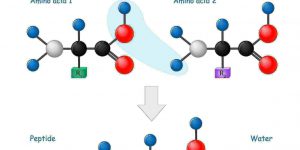
Synthesis of peptides is a complex process that usually involves different synthesis strategies and techniques. The following are some common approaches to peptide synthesis processes and techniques:
Solid-Phase Synthesis
This is one of the most commonly used methods for peptide synthesis. It is based on the stepwise addition of amino acid units on a solid-phase support to build peptide chains. The solid phase support materials typically used are highly reactive resins such as Rink-Amide or Fmoc-AM resin. During the synthesis process, the amino acid unit is immobilized on the solid phase by a reactive protecting group, followed by coupling, deprotection and elution to finally obtain the target peptide.
Solution-Phase Synthesis
This method synthesizes peptides in solution. It is usually applied to shorter peptide chains. In solution-phase synthesis, the amino acid unit is coupled to other amino acids in a coupling reaction via an activator (e.g., an activated acid or an activated carboxylic acid). After the reaction, steps such as removal of protective groups and purification are required to obtain a pure peptide product.
Chemical Synthesis
Chemical synthesis is a technique for synthesizing peptide by methods of organic synthesis. It usually involves a reaction using chemical reagents such as protecting groups, activators and solvents. Chemical synthesis methods can be used to synthesize complex peptide structures, but are more challenging for long chain peptides due to the number of steps and the potential for side reactions.
Biosynthesis
Biosynthesis is the synthesis of peptides using cellular mechanisms and enzymes in the organism. This method is commonly used in the synthesis of natural peptides, such as in the production of hormones and peptide drugs. Through genetic engineering techniques, genes encoding peptide are introduced into appropriate expression systems to synthesize the target peptide within the cell.
These synthetic methods are widely used in the field of peptide drugs. Each method has its advantages and limitations, and the choice of synthesis depends on factors such as peptide structural complexity, target purity requirements, scale and economics. Researchers choose the most suitable synthesis strategy and technique based on the specific synthesis needs.
| Type | Synthesis method | Advantage | Disadvantage |
| Chemical Synthesis | Solution-Phase Synthesis | High purity, easy purification, low cost | Complex, cumbersome and time-consuming |
| Solid-Phase Synthesis | Simplified reactions, automation, reduced losses | Shorter synthesis sequence, longer synthesis time time, higher purity, higher cost, shorter synthesis sequence lower purity and higher cost, Reagent toxicity | |
| Fermentation method | low cost | Narrow application range, difficult to separateDifficult to isolate and purify | |
| Biosynthesis | Genetic recombination method | Strong expressive directionality, High safety and costLow cost | Not easy to separate, yield Low, not easy to scale up production |
| Enzymatic hydrolysis | Mild reaction conditions, High selectivity | Difficult to separate, low yield Low yield |
What is Solid-Phase Synthesis?
Currently, solid-phase synthesis is the mainstay of peptide drug synthesis processes. The synthesis process of peptide drugs is mainly categorized into chemical synthesis method and biosynthesis method in consideration of technology application, production process, production cost, quality management and environmental protection requirements.
The chemical synthesis method is mainly used to synthesize peptide through amino acid condensation reaction. Such methods include solid-phase synthesis and solution-phase synthesis. The solid-phase synthesis method is mainly used for the synthesis of medium-length peptides, which is based on the gradual addition of amino acid units on a solid-phase support to build peptide chains. The solution-phase synthesis method is mainly used for the synthesis of short peptides, in which the amino acid units are coupled to other amino acids by activators in a coupling reaction.
Biosynthesis includes enzymatic hydrolysis, fermentation and genetic engineering methods. These methods utilize cellular mechanisms and enzymes in the organism to synthesize peptides. Enzymatic hydrolysis is the enzymatic cleavage of raw peptides into target peptides by the action of enzymes. Fermentation is used to synthesize peptides through the process of fermentation by microorganisms. The genetic engineering method utilizes genetic engineering techniques to introduce the gene encoding the target peptide into an appropriate expression system that will synthesize the target peptide within the cell.
At present, the solid-phase synthesis method is relatively mature, and most of the marketed peptide drugs use this process route. This is due to the advantages of solid-phase synthesis for peptide synthesis, which offers a high degree of control, high yields and high purity. However, with the continuous development and improvement of biosynthesis technology, biosynthesis also has a broad application prospect in the synthesis of peptide drugs.
Solid-phase synthesis is currently the most commonly used peptide synthesis process, which has become quite mature after years of development. In 1963, Merrifield proposed the classical solid-phase peptide synthesis (SPPS) method, a milestone that marked a new era in peptide synthesis. After decades of improvement and refinement, the solid-phase synthesis has formed a mature process with the Boc method and the Fmoc method as the main systems.
The core idea of the solid-phase synthesis is to combine the carboxyl group of the first amino acid of the target peptide with a solid-phase carrier (usually a resin) through covalent bonding. Then, starting with the amino group of that amino acid, the acylation reaction is carried out by removing the aminoprotecting group and the excess carboxyl group of the second amino acid. This step is repeated over and over again, resulting in the target peptide.
The main difference between the different solid-phase synthesis methods is the amine protecting group used. The Boc method uses Boc as the amino protecting group, while the side chain protecting group is usually a benzyl alcohol compound. The Fmoc method, on the other hand, uses Fmoc as the aminoprotecting group. Compared with the Boc method, the Fmoc method has the advantages of stable acidity, mild reaction conditions, fewer side reactions, and higher yields, so it has been widely used in the field of peptide solid-phase synthesis.
The advantage of the solid-phase synthesis is that it simplifies and automates the subsequent processing of each step. It avoids manual handling and losses in material transfer. However, the solid-phase synthesis has some drawbacks, such as shorter synthesis sequences, longer time-consumption, lower product purity, higher cost, and higher toxicity of reagents.
Difference Between Boc and Fmoc Methods
The Boc method and the Fmoc method are two amino-protected group methods commonly used in solid-phase synthesis, and they have some specific differences in peptide synthesis, as shown below:
- Amino Protecting Group
Boc method (t-Butyloxycarbonyl): The Boc protecting group is obtained by reacting t-Butanol acid with the amino group of an amino acid, protecting the amino group of the amino acid. This protective group is stable under alkaline conditions and can be removed under strongly acidic conditions.
Fmoc method (Fluorenylmethyloxycarbonyl): The Fmoc protecting group is obtained by reacting the amino group of an amino acid with Fmoc-Cl, which also protects the amino group of the amino acid. Fmoc protecting groups are stable under acidic conditions and can be removed under alkaline conditions.
- De-protection Methods
Boc Methods: Boc protective groups can be removed under strong acidic conditions. Commonly used deprotection reagents are acids, such as trifluoroacetic acid (TFA). The process of removing the Boc protecting group requires the use of organic solvents such as dimethylformamide (DMF) or dichloromethane (DCM).
Fmoc method: Fmoc protective groups can be removed under alkaline conditions. Commonly used deprotection reagents are alkaline solutions, such as alkaline acetone (piperidine) solution. The process of removing Fmoc protecting groups usually requires the use of organic solvents such as N,N-dimethylformamide (DMF) or dichloromethane (DCM).
- Photosensitivity
Boc method: The Boc protecting group is not photosensitive, so photolithography operations can be performed using UV light under the Boc method.
Fmoc method: The Fmoc protecting group is photosensitive and photolytic reaction occurs when exposed to UV light, so protection and deprotection operations under photosensitizing conditions are required under the Fmoc method.
- Reaction Conditions
Boc method: The reaction conditions under the Boc method are relatively mild and suitable for general amino acid condensation reactions.
Fmoc method: The reaction conditions under the Fmoc method are also relatively mild, and it is suitable for general amino acid condensation reactions, but it is necessary to pay attention to the characteristics of the photosensitive protective group.